Children’s Clothing
Shopping for children’s clothing is such a fun adventure for parents. It is not just about picking pretty colors or cute patterns. It is about finding outfits that let your little ones move, play, and grow comfortably. When you look for new clothes, you want items that feel soft against the skin but can also survive a day at the playground. As a parent myself, I know the struggle of finding that perfect balance between a stylish look and a shirt that won’t fall apart after one wash.
In this guide, we will explore everything you need to know about buying high-quality outfits. We will talk about fabrics, sizes, and how to save money while keeping your kids looking their best. Whether you are shopping for a newborn baby or an active school-aged child, these tips will help you make the best choices every time.
Quick Reference Summary Table
| Feature | What to Look For | Why It Matters |
| Fabric | 100% Organic Cotton, Bamboo, Linen | Prevents skin rashes and allows skin to breathe. |
| Durability | Double-stitched seams, reinforced knees | Kids play hard; clothes need to last longer. |
| Size | One size up from current age | Kids grow fast; it saves you money over time. |
| Fasteners | Snaps, zippers, or elastic waists | Makes it easier for kids to dress themselves. |
| Care | Machine washable and pre-shrunk | Saves time on laundry and prevents shrinking. |
Why Choosing the Right Fabric Matters
When you shop for children’s clothing, the fabric is the most important part. Kids have very sensitive skin that can get itchy or red if the material is too scratchy. Natural fibers like organic cotton are usually the best choice. Cotton is breathable, which means it keeps your child cool in the summer and warm in the winter. It also absorbs sweat, which is great for kids who never stop running around.
I always suggest staying away from heavy synthetic fabrics for everyday wear. Materials like cheap polyester can trap heat and cause discomfort. If you can, feel the inside of the garment before you buy it. Check for soft linings and smooth edges. High-quality children’s clothing should feel like a soft hug. This keeps your child happy and prevents them from tugging at their clothes all day long.
Essential Wardrobe Basics for Every Child
Every kid needs a solid “capsule wardrobe” of basics. These are the items of children’s clothing that they will wear almost every day. Think of things like plain t-shirts, comfortable leggings, and cozy hoodies. Having a few neutral colors like navy, grey, and white makes it easy to mix and match outfits in the morning. This saves you a lot of time when you are rushing to get out the door for school.
Don’t forget about sturdy denim jeans and soft joggers. These pieces are the backbone of any kid’s closet. When buying basics, I like to buy them in packs if possible. It is often cheaper, and you know they will all fit the same way. Having plenty of high-quality basics ensures that even if one shirt gets stained with juice, you have five more ready to go.
Tips for Finding the Perfect Size
Finding the right size in children’s clothing can be tricky because every brand is a little different. One brand’s “Size 4” might be much smaller than another brand’s. A great rule of thumb is to buy one size larger than your child’s current age. If your child is four years old, look at Size 5. This gives them room to grow, so they don’t grow out of their new favorite shirt in just two weeks.
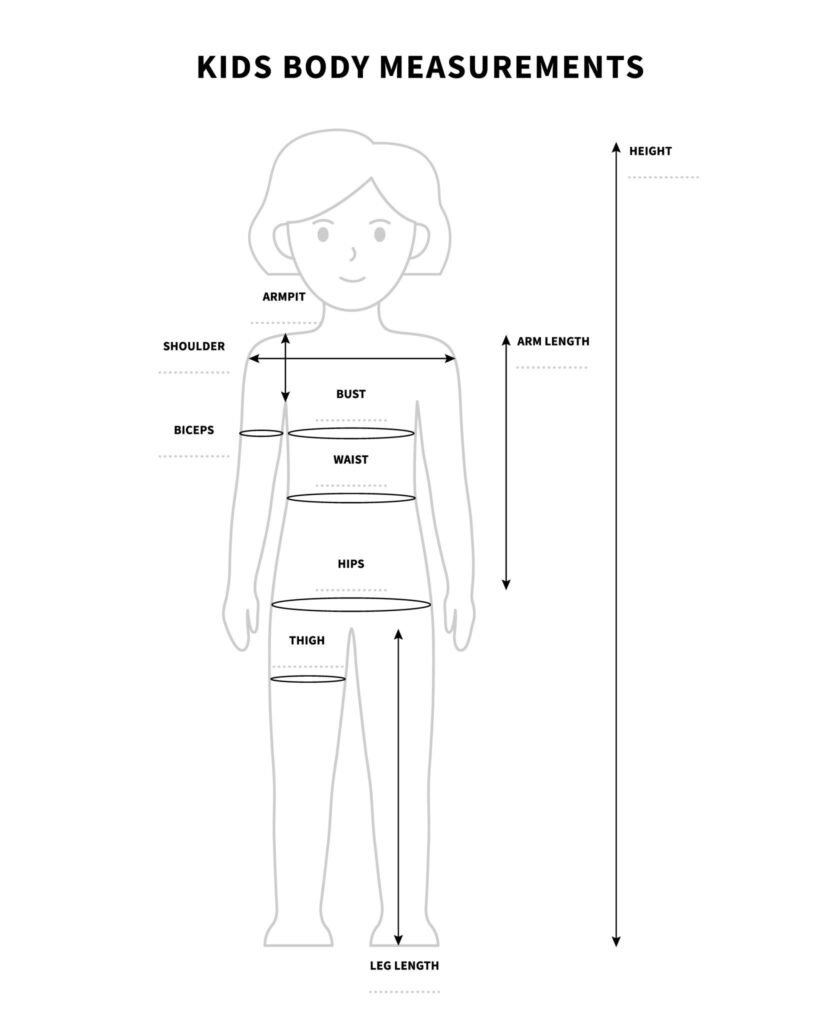
Measurements of the children body, size chart
Always check the height and weight charts on the clothing tags. These are much more accurate than just looking at the age. If you are shopping online, keep a measuring tape handy. Measure your child’s height and waist before you click “buy.” This simple step prevents the hassle of returning items that are too tight or way too long.
Durable Clothes for Active Playtime
Kids are experts at getting dirty and jumping into puddles. That is why your children’s clothing needs to be very tough. Look for pants with reinforced knees. These have an extra layer of fabric to stop holes from forming when kids crawl or fall. Double-stitched seams are another sign of a well-made garment. It means the thread won’t easily snap during a game of tag.
I remember buying a pair of cheap trousers for my son that ripped on the very first day. It was a lesson learned! Now, I look for thicker materials and stronger elastic. Investing a little more in durable children’s clothing actually saves you money. You won’t have to replace the items nearly as often. Durable clothes can also be passed down to younger siblings later on.
Dressing for the Changing Seasons
As the weather changes, so should your approach to children’s clothing. During the cold winter months, layering is your best friend. Start with a soft undershirt, add a sweater, and finish with a windproof coat. This lets your child take off layers if they get too warm while playing inside. In the summer, lightweight and light-colored clothes help reflect the sun and keep them cool.
Don’t forget about seasonal accessories like sun hats for July or woolen beanies for December. Proper children’s clothing for the rain is also a must-have. A good waterproof jacket and rubber boots mean the fun doesn’t have to stop just because it’s drizzling. Always check the weather forecast before picking out the day’s outfit to ensure your little one stays comfortable all day.
How to Save Money on Kids’ Fashion
We all know that kids grow out of things incredibly fast. This can make buying children’s clothing feel expensive. One of my favorite tips is to shop during the “off-season.” Buy winter coats in the spring when they go on sale. You can also find great deals at consignment shops or online resale groups. Many parents sell gently used clothes that still look brand new.
Another way to save is to host a “clothing swap” with friends and neighbors. You bring the clothes your kids have outgrown, and you take home “new” clothes from your friends. This is a great way to refresh their wardrobe for free! By being smart about when and where you shop, you can find high-end children’s clothing without breaking your budget.
The Importance of Easy-to-Wear Outfits
As children get older, they want to start dressing themselves. Choosing the right children’s clothing can help them become more independent. Look for items with elastic waistbands instead of complicated buttons or belts. Large zippers and simple snaps are also much easier for small hands to manage. This builds their confidence and makes your morning routine much smoother.
Avoid clothes with too many ribbons, strings, or tiny buttons. These can be frustrating for a child and can even be a safety hazard for toddlers. When children’s clothing is easy to put on, kids feel proud of their skills. It turns a daily chore into a fun learning experience. Plus, it gives you a few extra minutes to finish your coffee while they get ready!
Sustainable and Eco-Friendly Options
Many parents today care about the planet and want eco-friendly children’s clothing. This means looking for brands that use organic materials and fair labor practices. Organic cotton is grown without harmful chemicals, which is better for the earth and safer for your child’s skin. Look for labels like “GOTS Certified” to be sure the clothes are truly sustainable.
Choosing eco-friendly children’s clothing often means the quality is higher too. These brands tend to focus on making clothes that last a long time rather than “fast fashion” that falls apart. While they might cost a bit more at first, the long-term value is much better. You get peace of mind knowing you are making a healthy choice for your family and the environment.
Caring for Your Kids’ Clothes Properly
To make your children’s clothing last as long as possible, you must wash them correctly. Always read the care labels before throwing things in the machine. Washing clothes in cold water helps prevent shrinking and keeps colors bright. It is also better for the environment! I suggest turning t-shirts with cool graphics inside out to stop the designs from peeling off.
Try to avoid using too much bleach or harsh detergents. These can break down the fibers of the children’s clothing over time. If there is a tough stain, treat it immediately with a bit of dish soap or a gentle stain remover. Air-drying clothes whenever possible is also a great way to extend their life. Taking care of their outfits means they stay looking new for much longer.
Let Your Child’s Personality Shine
Finally, remember that children’s clothing is a way for kids to express themselves. Let them have a say in what they wear! Maybe they love bright yellow or want to wear a superhero cape every day. Including them in the shopping process makes them more excited to get dressed. It helps them develop their own sense of style and creativity.
Even if their outfit choice seems a little silly to you, it’s a big deal to them. As long as the children’s clothing is safe and appropriate for the weather, let them experiment. A happy child who feels good in their clothes is a confident child. Watching your little one walk out the door with a big smile on their face is the best reward for all your shopping efforts.
Frequently Asked Questions
1. What is the best material for kids with eczema?
The best material is 100% organic cotton or silk. These fabrics are very smooth and don’t have chemicals that can irritate sensitive skin. Avoid wool or polyester, as these can be itchy.
2. How often should I buy new clothes for my growing child?
Most kids go through a growth spurt every 3 to 6 months. It is a good idea to check their fit at the start of every new season to see if they need a size update.
3. Are expensive brands of children’s clothing worth it?
Sometimes! Higher-priced brands often use stronger fabrics and better stitching. However, you can find great quality at mid-range prices too. Always check the seams and fabric feel instead of just the brand name.
4. How can I remove grass stains from kids’ pants?
Pre-treat the stain with a mixture of vinegar and water or a specialized stain remover. Let it sit for 15 minutes before washing. Avoid hot water, as heat can set the stain permanently.
5. Is it safe to buy second-hand children’s clothing?
Yes, it is very safe and eco-friendly! Just make sure to wash the clothes thoroughly in hot water before your child wears them. Check for loose buttons or strings that could be a safety risk.
6. How many outfits does a child really need?
A good rule is about 7 to 10 daily outfits. This gives you enough for a full week plus a few extras for accidents, without overfilling their closet.
Conclusion
Choosing the right children’s clothing doesn’t have to be stressful. By focusing on soft fabrics, durable designs, and easy-to-wear styles, you can build a wardrobe that both you and your child will love. Remember to buy a size up to save money and always prioritize comfort over fancy trends.
Ready to refresh your kid’s closet? Start by checking their current sizes today! If you found these tips helpful, share this guide with another parent who wants to make shopping easier. Happy styling!